What Ash Wednesday Is Really Saying to You
You are dust, and to dust you shall return.
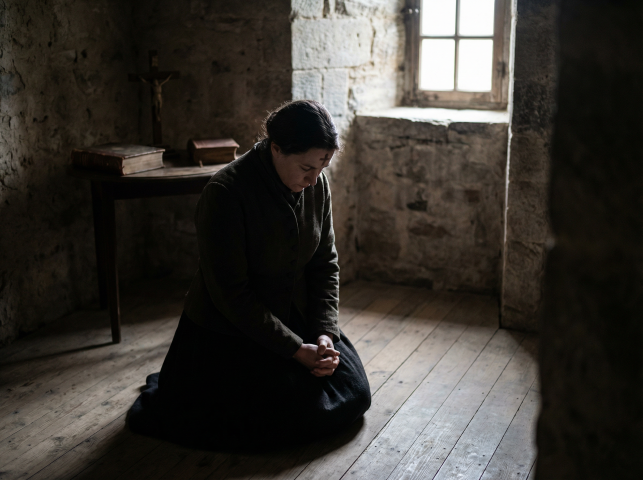
Those words are spoken quietly, almost gently, yet they land deep within you like a physical weight. You stand in the dimly lit sanctuary, the air thick with a sacred stillness. One by one, people move forward in line, each step echoing softly on the stone floor. When your turn comes, a thumb presses firmly into your forehead, leaving a gritty, dark smudge in the shape of a cross. The texture feels strange—almost abrasive—against your skin. It’s a tangible reminder, a mark you cannot easily wash away. You walk back to your seat carrying this visible symbol of your own mortality, a reminder etched not just on your skin, but on your soul.
We spend almost our entire lives resisting this moment. From the earliest age, you’ve been surrounded by messages telling you to fight the signs of aging, to hide your weaknesses, and to endlessly chase after youth and vitality. We live in a culture engineered to hide death, aging, and fragility. You buy creams and potions to erase wrinkles, apply filters to smooth your photographs, and fill your days with so many tasks that there’s barely time to breathe, let alone sit quietly with your own limits. Everywhere you turn, the message is clear: you are boundless, invincible, and entirely self-made. Ash Wednesday refuses to participate in this illusion. It pulls back the curtain and forces you to look in the mirror and confront the one truth you’ve worked so hard to avoid: you are fragile, and your time here is brief.
But to truly understand the ash, you have to look back to the beginning. The story starts there, in the garden. In Genesis 2:7, we are told that the Lord God formed humanity from the dust of the ground. Imagine God kneeling in the dirt, gathering the earth with care, shaping it with purpose, and then breathing his own breath into it. That breath brought life, a sacred spark that animates you still. The ash on your forehead is not just a reminder of death—it’s a reminder of your origin. You are made of the earth, shaped by God’s own hands. You are entirely dependent on the breath of God for every single heartbeat you take. When God told Adam, "for dust you are and to dust you will return" (Genesis 3:19), it was a consequence of the fall, yes, but it was also a profound, inescapable truth. You are not the Creator; you are the created.
This truth can feel heavy, even sorrowful. But there is a strange, unexpected gift hidden inside this grief. If you are only dust, then you do not have to carry the weight of the world on your shoulders. You do not have to be invincible. You do not have to be perfect. You can finally stop trying to be God. The same God who lovingly shaped you from the dirt knows exactly how fragile you are. The Psalmist writes, "For He knows our frame; He is mindful that we are dust" (Psalm 103:14). He is not surprised by your weakness. He is not offended by your limitations. He expects them. This is a God who meets you not in your strength, but in your frailty. And in that meeting, you find grace.
There is freedom in admitting your limits. When you accept that you are dust, you give yourself permission to rest, to fail, to be vulnerable. You no longer have to pretend to be strong all the time or to have all the answers. Instead, you can lean into the gentle reminder that your worth is not based on your achievements or your ability to control life’s chaos. Your worth is rooted in the God who formed you from dust and who loves you tenderly, just as you are.
And here is the most beautiful truth of all: the God who says "you are dust" is the same God who chose to become dust with you. In the Incarnation, Jesus Christ took on our fragile, tearable, breakable flesh. He entered into the dust of human existence—not as a distant deity, but as one who fully embraced the vulnerability of being human. The cross smeared on your forehead is not just a symbol of your death; it is the symbol of His. Jesus walked into the grave so that your return to the dust would not be the end of your story. The ash and the cross belong together. Mortality and redemption are inextricably bound. Because of Him, your fragility is not a sentence but a pathway to grace.
So what do you do with this today? Do not rush past it. Don’t quickly brush the ash off your forehead or push the thought of death aside. Instead, sit with the ash. Leave it on your forehead as you go about your day—whether you find yourself at the grocery store, in the office, or at your kitchen table. Let it be a physical, tangible reminder that your time is short and your life is a vapor. Let the honesty of this day do its quiet, uncomfortable work in your soul. Let it strip away your pride and leave you with nothing but gratitude for the breath in your lungs.
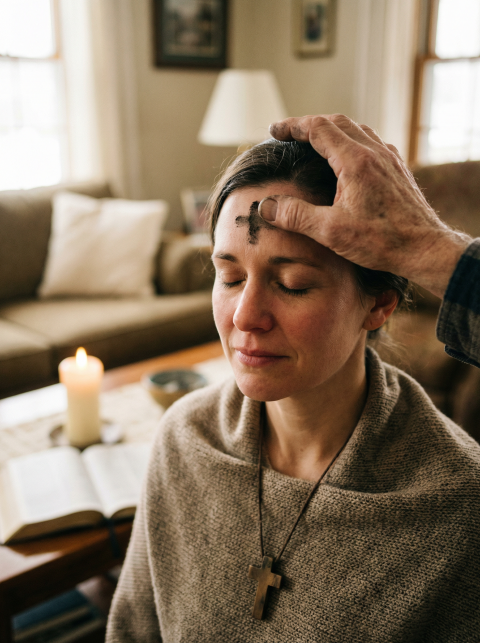
When you carry that ash with you, it can change the way you live. You might find yourself less caught up in the frantic pursuit of success or approval, and more present to the simple, sacred moments of each day. You might become more patient with yourself and others, understanding that we all share this fragile humanity. You might find new compassion for those who are struggling, knowing that we are all dust, all fragile, all in need of grace.
You are invited to lean into this season of preparation with open hands and a willing heart. I encourage you to begin the "Lent: 40 Days of Surrender" reading plan or join the "Lenten Surrender and Generosity" challenge in Faithline. Take this time to surrender your illusions of control, and return to the God who formed you from the dust, and who loves you enough to redeem you from it. Let this season be a journey—not just of giving up, but of receiving: receiving grace, receiving peace, receiving the deep, abiding love of God who knows you intimately and calls you beloved.
May this Ash Wednesday mark the beginning of a transformation in your heart, one that carries you gently toward Easter morning with hope renewed and spirit restored. You are dust. You are deeply loved. And by God’s grace, you are never alone.